For Sale by Owner vs. Real Estate Agent: Pros, Cons, and Hidden Costs
October 09, 2026 - Selling
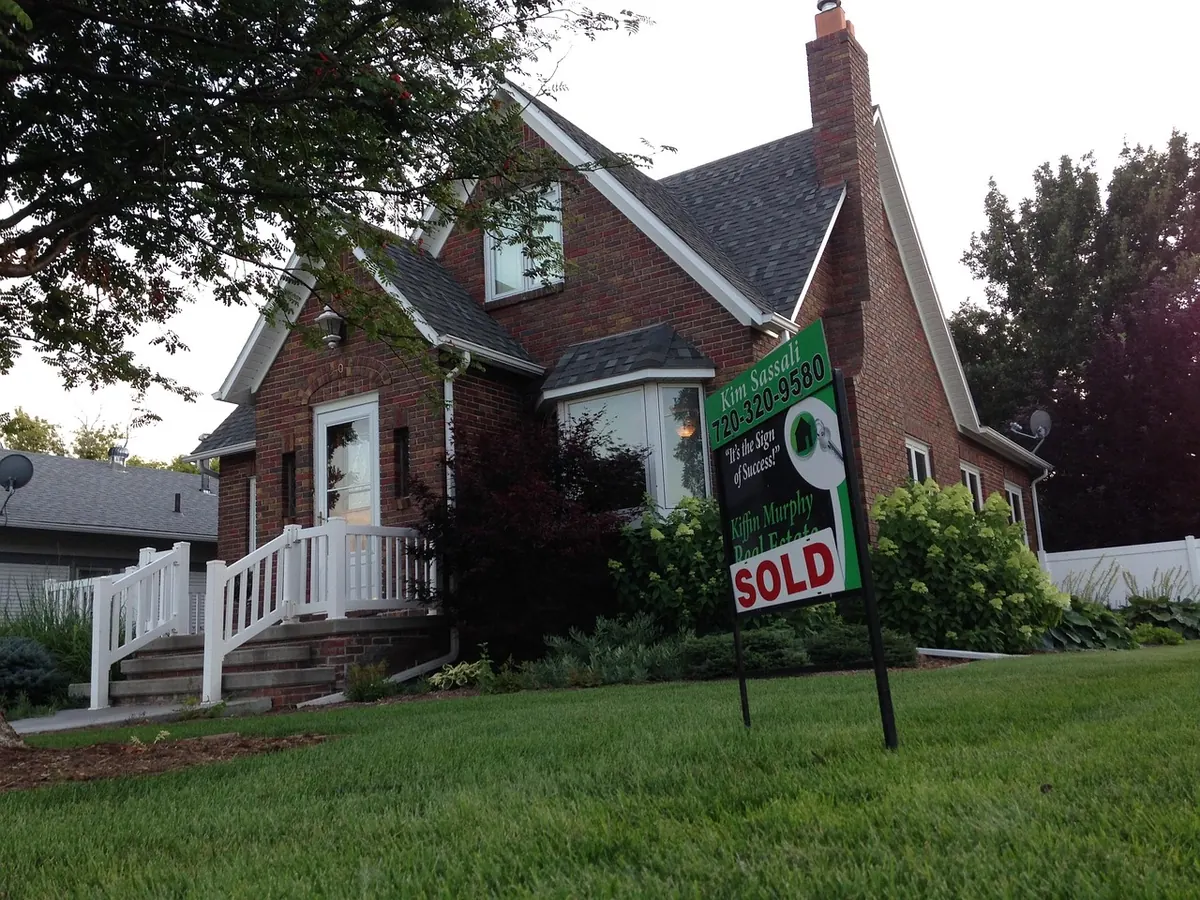
Pricing is the one decision you can't undo gracefully. Paint colors can be changed, furniture rearranged, photos reshot. But the number you attach to your home on day one becomes the reference point for every buyer who walks through the door, and it shapes every negotiation that follows.
Get it right and offers tend to arrive within a couple of weeks. Get it wrong and you spend the next three months chasing the market downward one price cut at a time, while buyers quietly assume something must be wrong with the house. Here's how to land on a number that sells without giving away value you've earned.
A comparative market analysis — a CMA — is the backbone of any sane pricing decision. A CMA looks at homes similar to yours that have actually sold, usually within the last three to six months, in your immediate area. It then adjusts for the differences between those homes and yours.
What matters most is what buyers have already agreed to pay, not what sellers are asking. List prices tell you what your neighbors hope to get. Sold prices tell you what the market delivered. That distinction is where most overpricing begins, because a house down the street listed at an optimistic number is not evidence that you can get it too.
Then adjust for differences: an extra bathroom, a finished basement, a larger lot, an updated kitchen, a busy road, a corner position. Adjustments are judgment calls, which is why two agents can look at the same comps and arrive at numbers that differ by a few percent. That range is normal. What isn't normal is a price that ignores the comps entirely.
Buyers don't browse a smooth continuum of prices. They search in brackets — typically steps of $25,000 or $50,000 — and they set a maximum on the search filter. That filter is a hard wall.
Say your home is realistically worth around $405,000. Priced at $399,000, you appear in every search up to $400,000 and you look like strong value at the top of that bracket. Priced at $415,000, you vanish from the $400,000 search entirely and you're now the cheapest, least impressive option in a bracket where buyers expect more house. Same property, radically different audience.
The lesson: aim to be the best-value home within a bracket, not the weakest home in the bracket above it.
Pricing isn't purely arithmetic. Buyers read numbers emotionally, and a few patterns repeat often enough to plan around.
Charm pricing works, but with limits. A list price of $399,900 rather than $400,000 keeps you inside the lower search bracket and matches the way people mentally sort prices. A price of $402,000 just looks like an odd number — buyers can't tell whether you're flexible or fussy, and it signals little. Round numbers, meanwhile, suggest firmness, which can be useful in a hot market and off-putting in a slow one.
More importantly, buyers assess value by comparison, not by absolutes. Nobody knows what your house "should" cost. They know it's $20,000 more than the one with the renovated kitchen two streets over and $15,000 less than the one backing onto the park. Your price is a sentence in that conversation, so make sure it says something defensible.
Most overpricing isn't greedy. It's a series of small, reasonable-sounding assumptions that add up.
The market answers quickly, and its answers are specific if you know how to read them.
Plenty of showings but no offers usually means you're close on price and the issue lies in condition, presentation or something structural buyers keep mentioning. Sparse showings — or none — means the price is asking buyers to do too much work, and no amount of fresh flowers will fix that. Repeated second showings with no offer often means buyers like the home but can't justify the number, or they're waiting to see whether you'll blink.
Track three things: how many showings you get, how many turn into second visits, and what buyers say afterward. Then act on the pattern, not on one person's opinion.
Pricing well isn't about being the cheapest house on the block. It's about being the obvious choice in the bracket where your buyer is already looking. Do that, and 30 days stops feeling ambitious.
This is general guidance, not a valuation of your specific property. Markets, neighborhoods and individual homes vary enormously, so talk to a licensed local agent or appraiser before you commit to a list price.
Photo: tkoch / Pixabay

Weigh what a for-sale-by-owner listing really saves against marketing reach, legal risk, and the hours you will...

A practical checklist of the loan fees, title charges, taxes, and prepaid expenses buyers pay at closing, plus how...
Copyright © 2026 Row Property. All Right Reserved.